
Introduction of PI

Department of Neuroscience, Faculty of Life and Health Sciences, Shenzhen University of Advanced Technology
Research Area
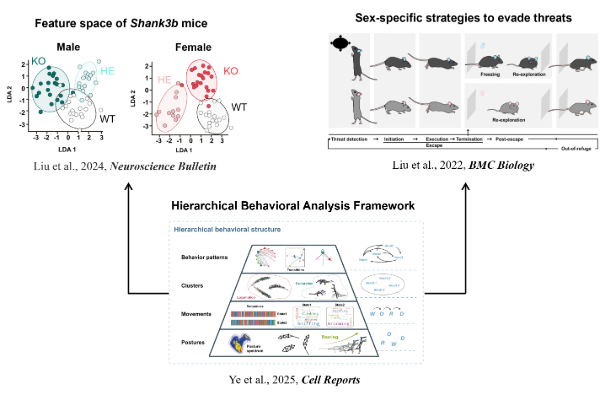
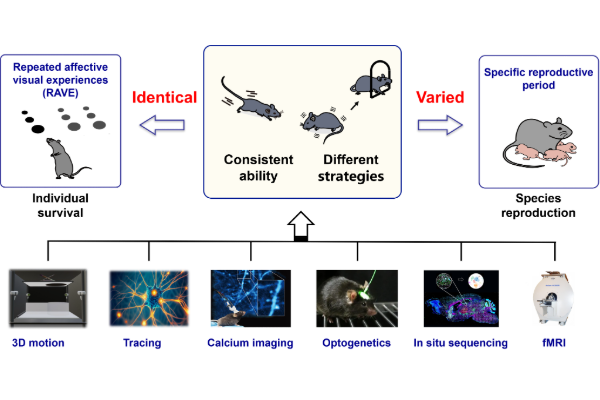
Understanding how sex differences in the brain contribute to distinct neuroethology characteristics, from molecular mechanisms to neural circuits, is a major challenge in neuroscience. Animals have developed distinct natural behaviors, many of which show sexual dimorphism. Moreover, many neuropsychiatric disorders exhibit sex differences in terms of prevalence and clinical features. Our approach combines machine learning-based behavioral analysis with neural circuit tracing and modulation techniques to address three primary goals: 1) developing and advancing data-driven techniques for behavioral genomics analysis, 2) investigating the distinct features of sex-specific neuroethology and their underlying mechanisms; 3) elucidating variations in neuroethology and their neural mechanisms across different brain states.